
You are about to leave a GSK website
You are about to leave a GSK website. By clicking this link, you will be taken to a website that is independent from GSK. The site you are linking to is not controlled or endorsed by GSK and GSK is not responsible for its content.
B7-H4: present in >95% of ovarian and endometrial tumors, but minimally expressed in most healthy tissues1-3*†
Patients with advanced ovarian or endometrial cancer have high unmet needs4,5
In ovarian cancer
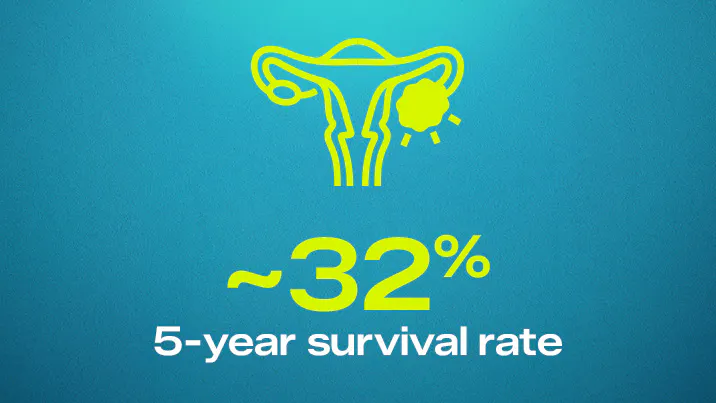
Only ~32% of patients diagnosed with metastatic disease survive 5 years or more in the US.4
In endometrial cancer
Only ~19% of patients diagnosed with metastatic disease survive 5 years or more in the US.5

A growing number of targets are currently being investigated in gynecologic cancers, but this raises a key question6:
Which emerging targets are gaining momentum in gynecologic cancers?
B7-H4, an immune checkpoint protein broadly expressed in solid tumors, holds distinct potential as a target in ovarian and endometrial cancers1,2,7
Many characteristics of B7-H4 make it an appealing investigative target:
Expressed in >95% of ovarian and endometrial tumors, with minimal expression in healthy tissues1-3*†
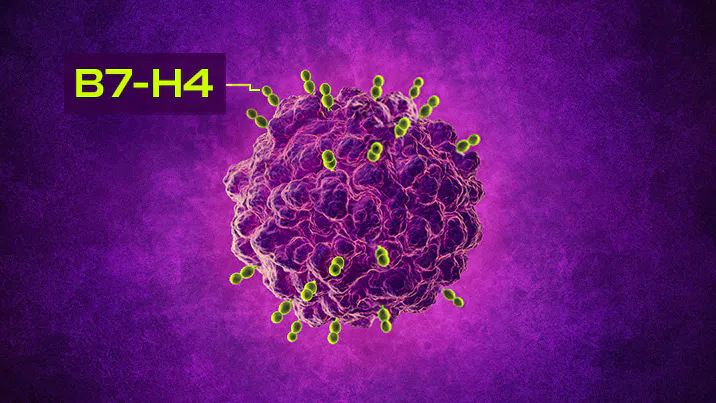
Impairs anti-tumor immunity by directly communicating with immune cells7-9

Localized to the cell surface, making it a promising target for antibody-based mechanisms7
The role of B7-H4 in oncogenic processes is two-pronged7-10
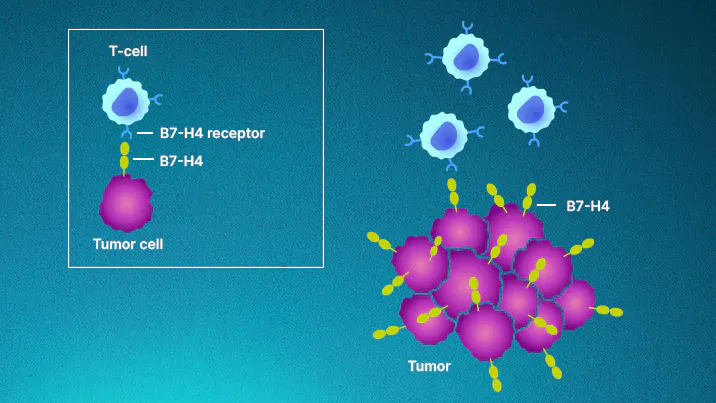
Tumor immune evasion
B7-H4 promotes a tumor's ability to evade immune detection and elimination by inhibiting effector T-cell function7-9
Tumor progression
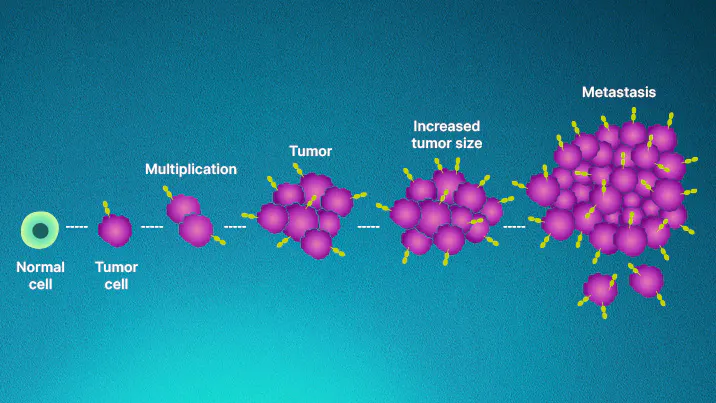
B7-H4 facilitates tumor progression by promoting tumor cell proliferation, invasion, and metastasis8,10
GSK is HERE to advance the emerging science behind B7-H4 in gynecologic cancers
Key questions
Illustration depicts relative B7-H4 expression. Expression levels may vary across tumors, patients, and healthy tissues.
*B7-H4 expression was assessed using tumor tissue samples from 103 patients with epithelial ovarian cancer using a tissue microarray.1
†B7-H4 expression was assessed in specimens obtained from 63 patients with endometrial cancer in a single-center, retrospective cohort study using immunohistochemistry staining.2
B7-H4=B7 homolog 4.
References
Zhou L, Duan Y, Fu K, Zhang M, Li K, Yin R. The role of B7-H4 in ovarian cancer immunotherapy: current status, challenges, and perspectives. Front Immunol. 2024;15:1426050.
Gorzelnik K, Wasaznik-Jedras A, Wicherek L, Szubert S. Expression of B7-H4 in endometrial cancer and its impact on patients’ prognosis. Ginekol Pol. 2024;95(4):252-258.
Zhang C, Miao Z, Cao J, Wang X, Shi T. B7-H4: a multifaceted immune checkpoint and oncoprotein in cancer biology and immunotherapy. Front Immunol. 2026;17:1837397.
National Cancer Institute. Cancer stat facts: ovarian cancer. SEER Website. Accessed August 26, 2026. https://seer.cancer.gov/statfacts/html/ovary.html
National Cancer Institute. Cancer stat facts: uterine cancer. SEER Website. Accessed August 26, 2026. https://seer.cancer.gov/statfacts/html/corp.html
GlobalData Drugs Database. http://pharma.globaldata.com/Drugs/SearchAdvExport. Accessed August 28, 2026.
Luo Y, Yuan Y, Liu D, Peng H, Shen L, Chen Y. Targeting novel immune checkpoints in the B7-H family: advancing cancer immunotherapy from bench to bedside. Trends Cancer. 2025;11(6):540-559.
Phipps M, Falchook GS. B7 Homolog 4 (B7-H4)-directed agents in oncology clinical trials: a review. J Immunother Precis Oncol. 2025;8(2):153-160.
Dawidowicz M, Kula A, Mielcarska S, Świętochowska E, Waniczek D. Prognostic value of B7H4 expression in patients with solid cancers: a systematic review and metaanalysis. Int J Mol Sci. 2024;25(9):5045.
Smith JB, Stashwick C, Powell DJ. B7-H4 as a potential target for immunotherapy for gynecologic cancers: a closer look. Gynecol Oncol. 2014;134(1):181-189.